Departure time, duration, bus type and fare side by side for every operator on the route.
 Loading your digital counter
Loading your digital counter
Loading your digital counter
.png)
State transport and private operators in one search, with a seat map so the customer picks the seat instead of accepting whatever is left.
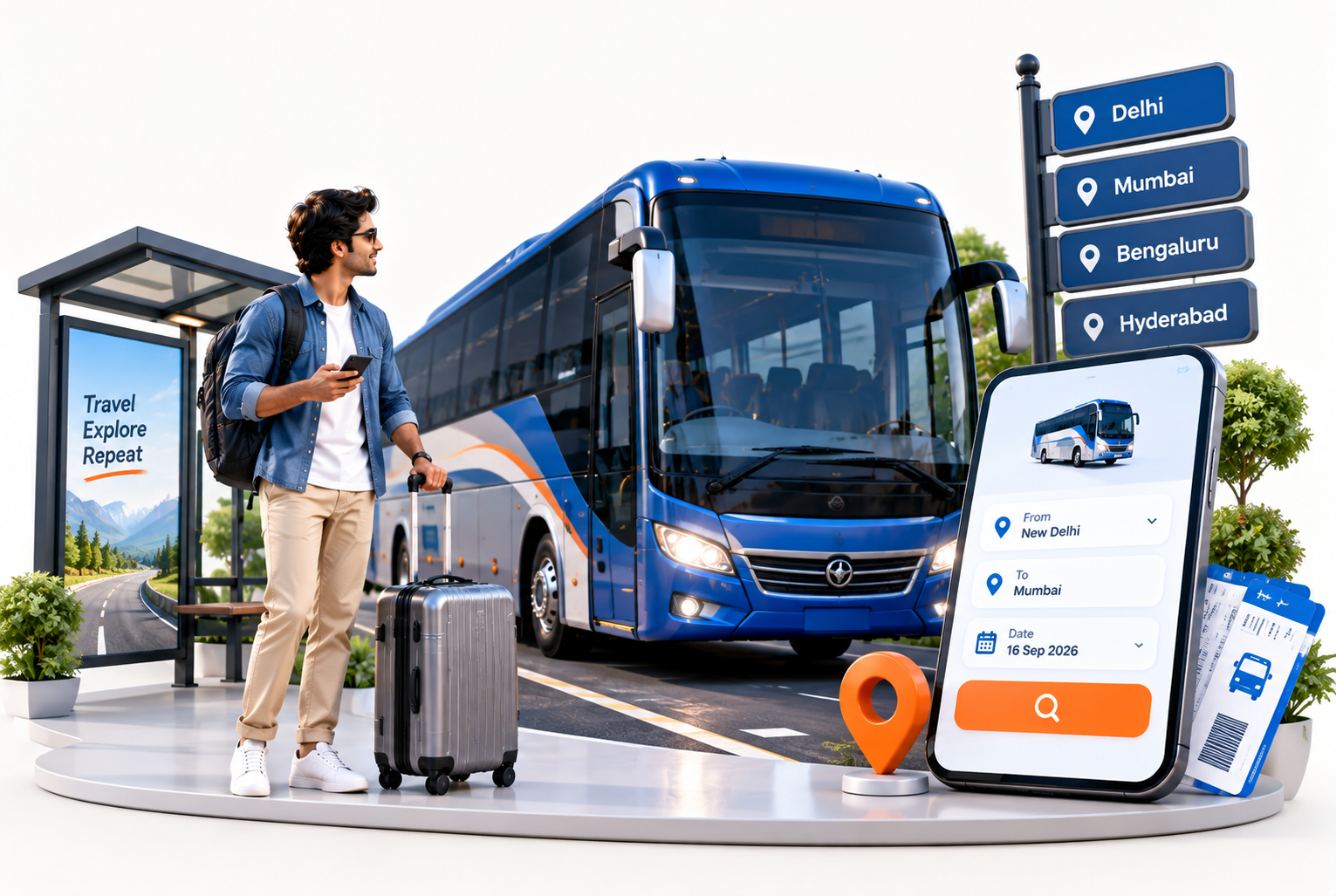
Bus travel carries more passengers than any other intercity mode, and most of those seats are still booked a day or two before travel. That makes the nearest counter the natural place to do it.
Dhangro brings state transport corporations and private operators into one search, with the seat map, boarding points and drop points shown before payment.
Details that decide whether a passenger has a comfortable journey or a bad one.
Departure time, duration, bus type and fare side by side for every operator on the route.
Sleeper, semi sleeper and seater layouts with a live map of what is still free.
Pick the stop nearest the passenger so they are not sent to a distant terminal.
Cancel within the operator's window, with the refund credited back to your wallet.
Origin, destination and date. Buses running that day are listed with fare and type.
Open the seat map, pick the seat the passenger wants, and select a boarding point.
Name, age, gender and a mobile number for the operator's confirmation message.
Pay from your wallet, print the ticket, and take your fare and service charge from the customer.
Students, workers and patients travel by bus regularly, which makes this steady work rather than seasonal.
A passenger booking tonight for tomorrow will not travel to an agency. They will walk to you.
Bus booking is the simplest of the three travel services, which makes it a good place to start.
State transport corporations across most states plus a large list of private operators. Availability varies by route.
Changes after booking depend on the operator. Choose carefully at booking and confirm the point with the passenger.
The operator refund is credited back to your wallet and the panel shows the status. Inform the passenger as soon as the alert arrives.
Most operators allow up to six passengers in a single booking. Larger groups can be split across two bookings.
It is the quickest travel service to learn and the one your customers ask for most often.